ApneaSense · Home
On-device acoustic breathing models for evaluation
Assess an acoustic breathing-pattern model for your device or sleep product. Platform-specific engines already run in SomniSense on iOS and Android, marking possible breathing pauses for review. Public research explains defined classification tasks; a pilot must establish fit on your hardware. There is no ready-made, platform-neutral buyer SDK today.
Read the research and its limits →Three kinds of evidence, three different questions
Research: papers and method code let your team inspect task definitions, datasets and measured configurations. A window-classification result does not validate clinical event boundaries or an individual diagnosis.
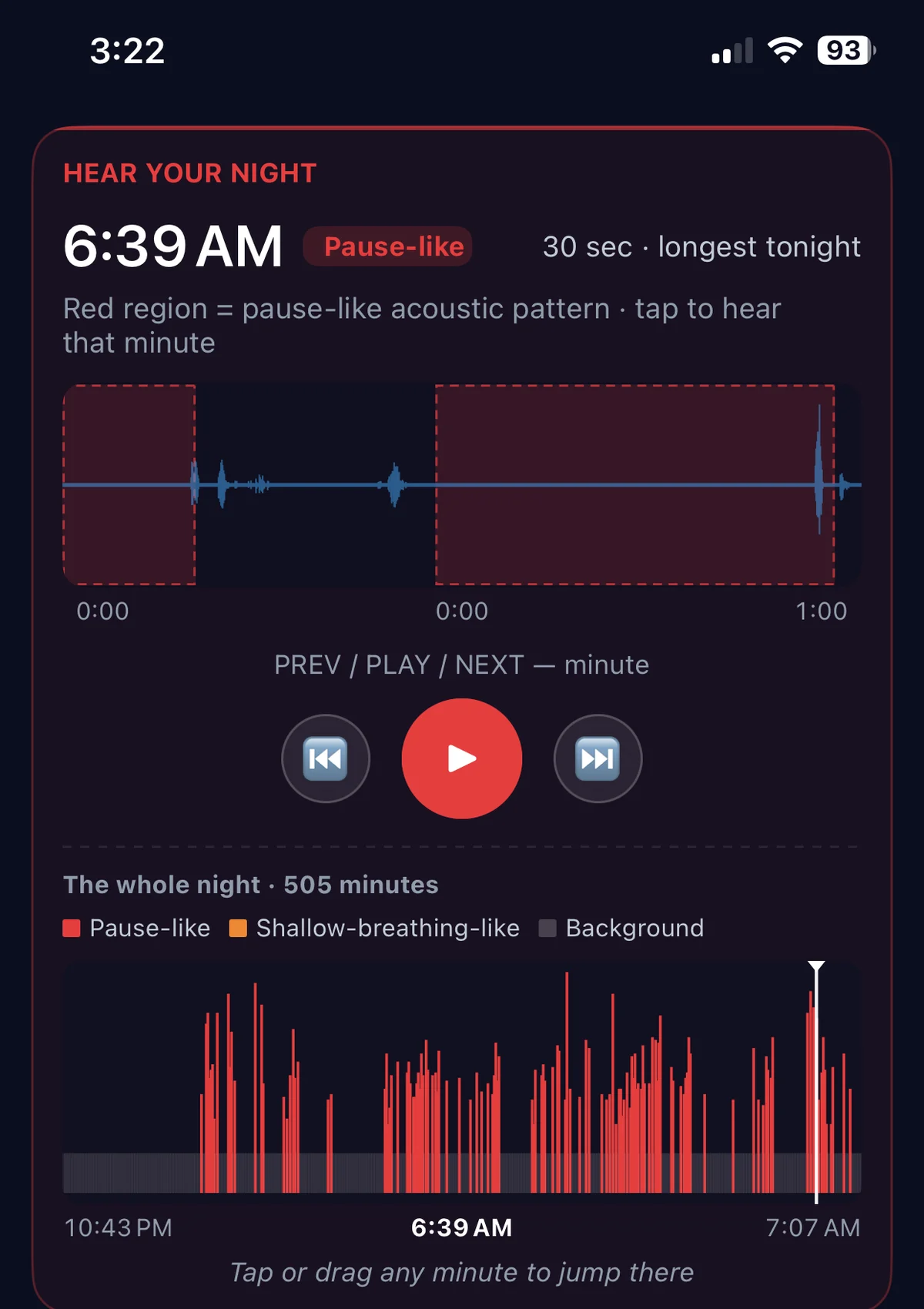
Current App: SomniSense demonstrates that matched platform engines can organize acoustic candidates into a review workflow. An App screenshot does not establish performance on your microphone or chip.
Buyer pilot: specify the capture path, environment and desired output, then agree a representative evaluation. The result can be a decision to stop, narrow the use case or discuss a platform-specific integration.
Start with your product question
A bedside device, hearable or sleep-research product may have a different microphone position, noise profile and power budget from a phone. Describe which observations would help your users and what your team needs to measure. These are possible evaluation contexts, not supported-device or customer claims.
From model output to something a person can inspect
SomniSense connects a candidate to estimated time and duration, a marked waveform, surrounding audio and its place in the night. For a pause-like candidate, review sound before the silent interval and when sound resumes. That product workflow shows how candidate output can be made reviewable. Your microphone, noise conditions and interface still need their own evaluation.
Questions before you proceed
Can this provide sleep apnea screening for my product?
The current offer does not establish OSA screening or diagnostic performance. A disease-related intended use would need its own evidence and regulatory assessment; the research label is not a product authorization.